About the Journal
Publishing Unit: Unidad Académica Facultad de Historia.
Editor-in-Chief: Dra. Venecia Citlali Lara Caldera
Description:
Escripta is a scientific journal that promotes knowledge and research on historical processes in Mexico and Ibero-America through an interdisciplinary dialogue with the Social Sciences and Humanities.
The journal welcomes original articles derived from research findings or scholarly reflections on issues across diverse geographical and temporal contexts that adopt a historical perspective as a means of critically examining social phenomena. It also publishes critical reviews that establish connections between recent works and current fields of research. All submissions undergo a double-blind peer-review process. Escripta does not charge authors any fees for the submission, processing, or publication of their articles.
The journal is institutionally supported by the Academic Bodies associated with the graduate programs (Master’s and Doctoral degrees) of the Faculty of History at Universidad Autónoma de Sinaloa.
Aim:
To contribute to scientific knowledge through the publication of original and unpublished research in the fields of History and the Social Sciences.
Publication Frequency:
Biannual (Semiannual)
Country:
Mexico
Scope:
To encourage the publication of original contributions in the fields of History and the Social Sciences that advance academic debate and historical knowledge.
Review Process:
Double-blind peer review.
Publishing Model:
Diamond Open Access (Diamond OA).
Publication Fees:
No Article Submission Charges (ASC) or Article Processing Charges (APC).
Exclusive Rights Reservation Number:
04-2025-120416551800-102
ISSN:
2594-2891
Publication Format:
PDF
Indexed in:
Google Scholar, Latindex LatinREV, DOAJ, MIAR, LACLI and ROAD.
Current Issue
Vol. 8 No. 15 (2026): Tema Libre
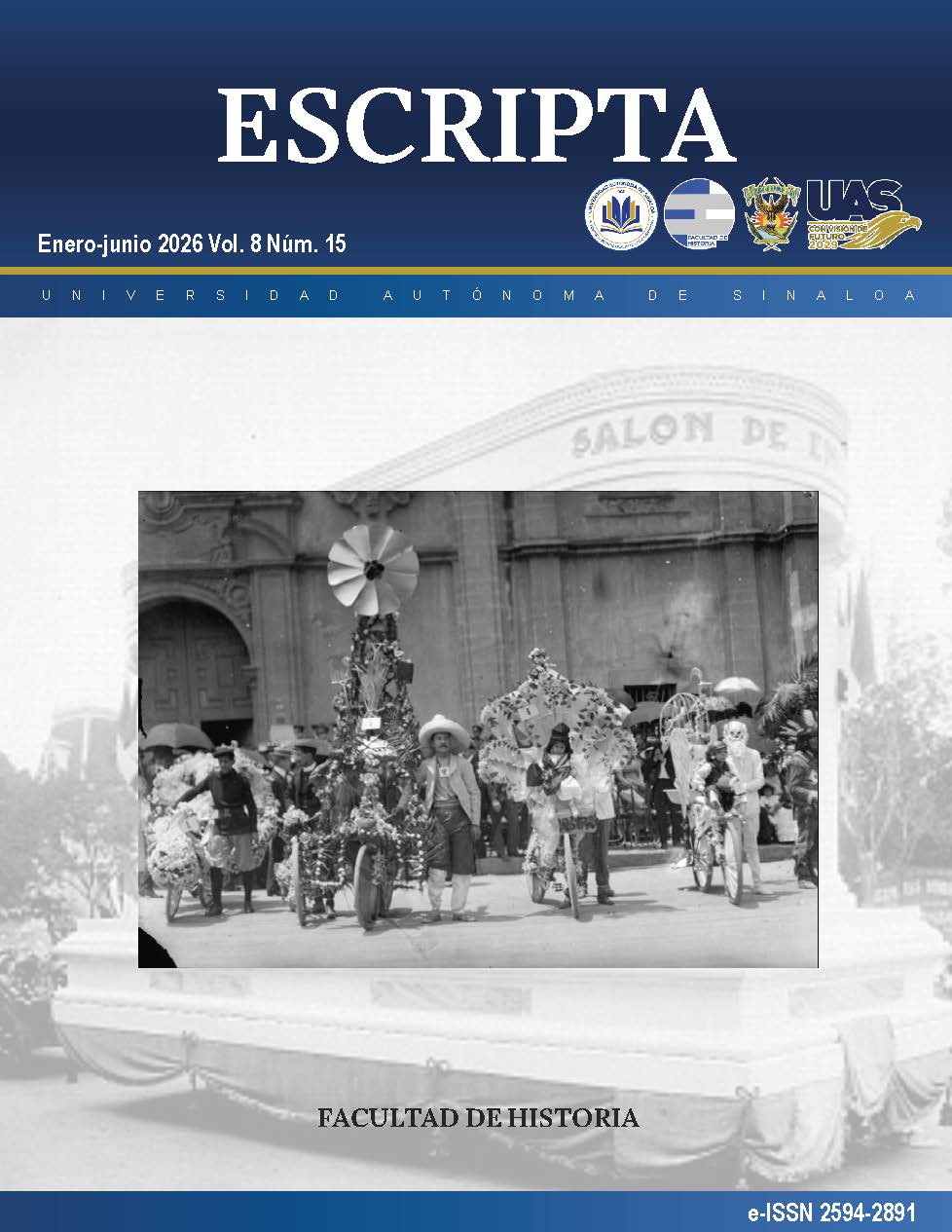
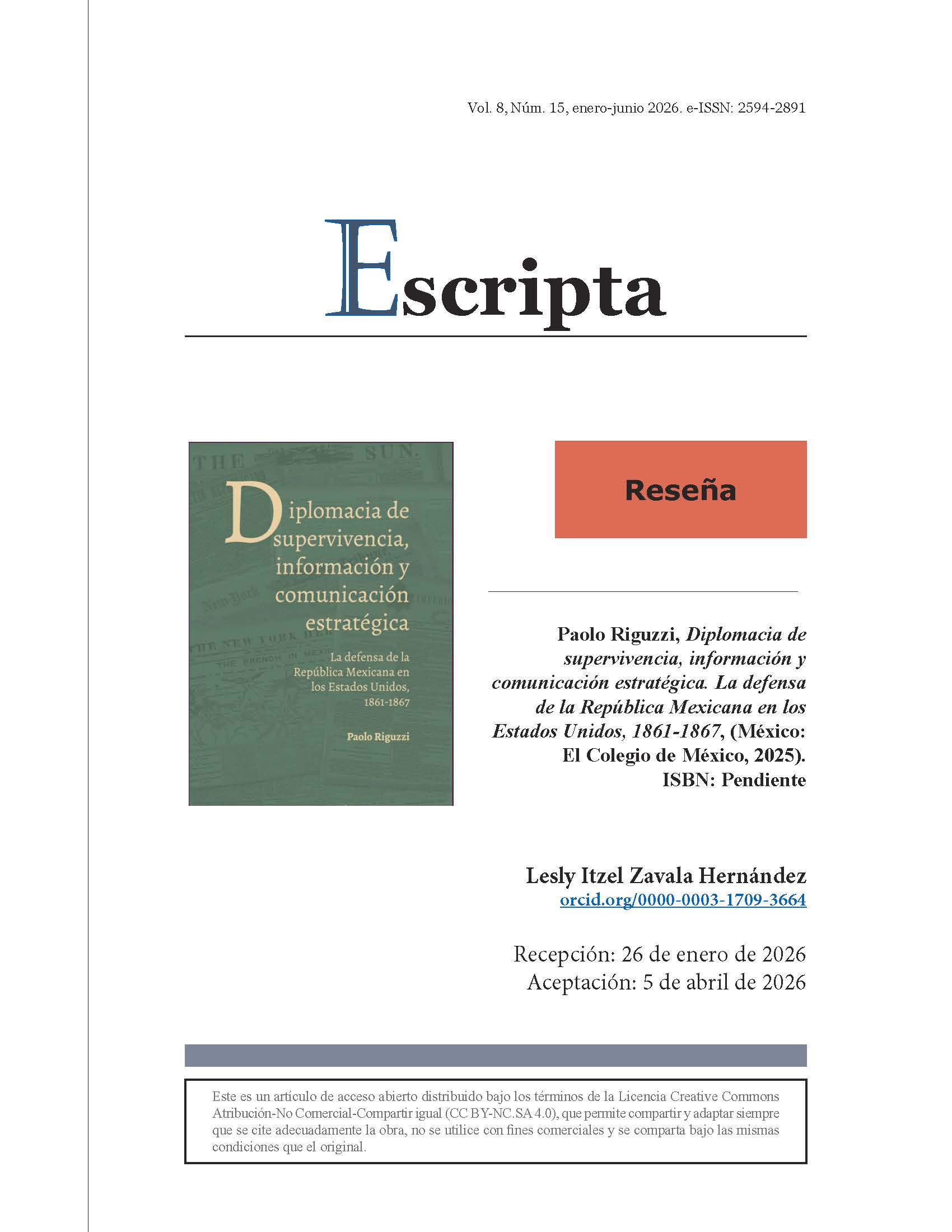
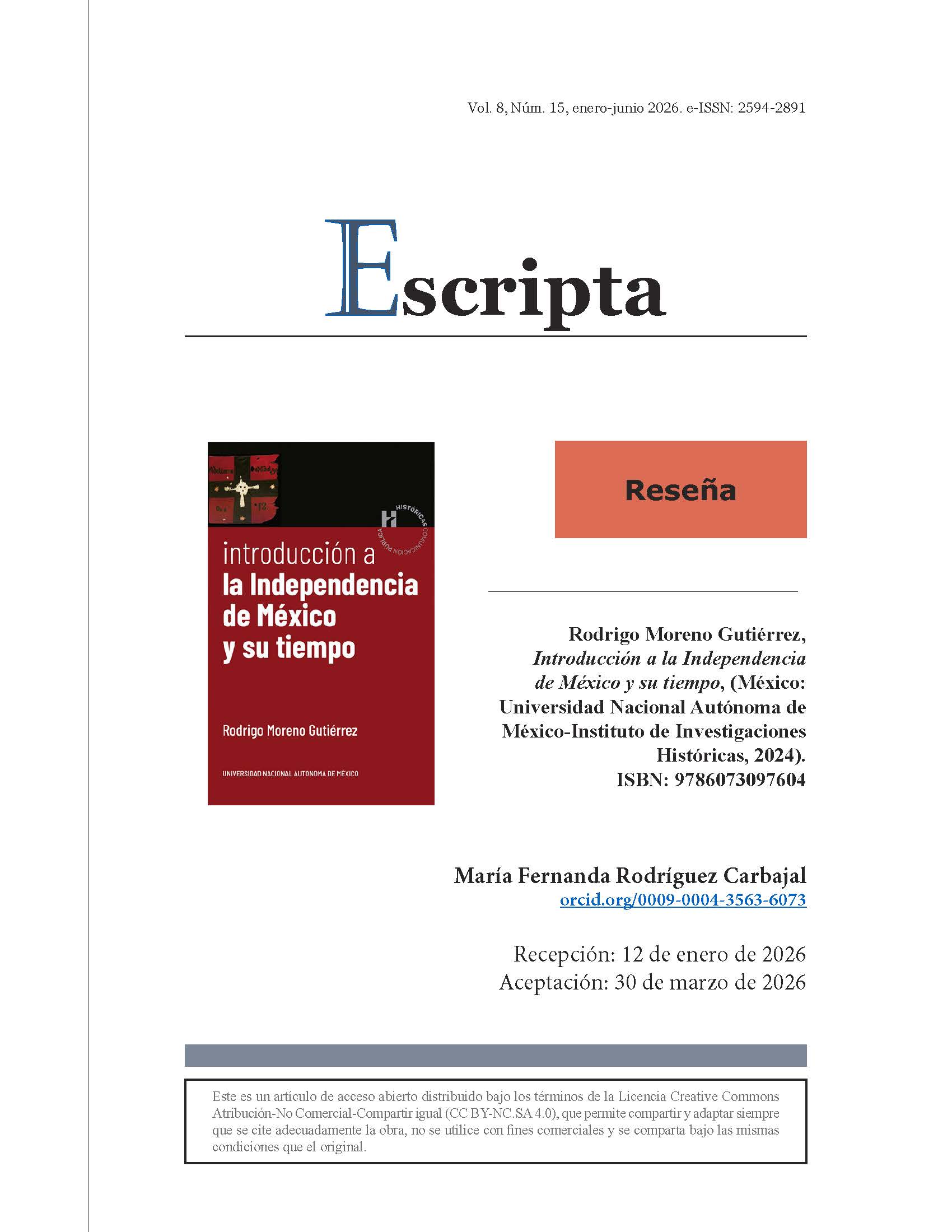
This 15th issue of *Escripta* brings together five original historical research articles and two book reviews. Drawing from diverse geographical settings, time periods, and research inquiries, these contributions explore the various ways in which past societies constructed, negotiated, and enacted their social order. The thematic diversity of the featured work offers insight into historical processes involving not only political institutions and organizations, but also families, communities, and individuals—all of whom navigated their historical reality through conflicts, norms, practices, representations, and social experiences. We always find it exciting to launch an open-themed issue, as the response from our fellow researchers depends on a variety of factors, such as the journal’s scope and the prevailing themes and time periods currently of interest within the academic community. In this regard, the current issue includes articles spanning a chronological range from the final decades of the 18th century through the 20th century, covering various regions across Mexico. While previous issues have featured work from Central and South America, the articles that successfully navigated the entire editorial process for this particular issue happen to be studies focused on Mexico.
Published:
2026-07-17