Archives
-
Escripta Revista de Historia
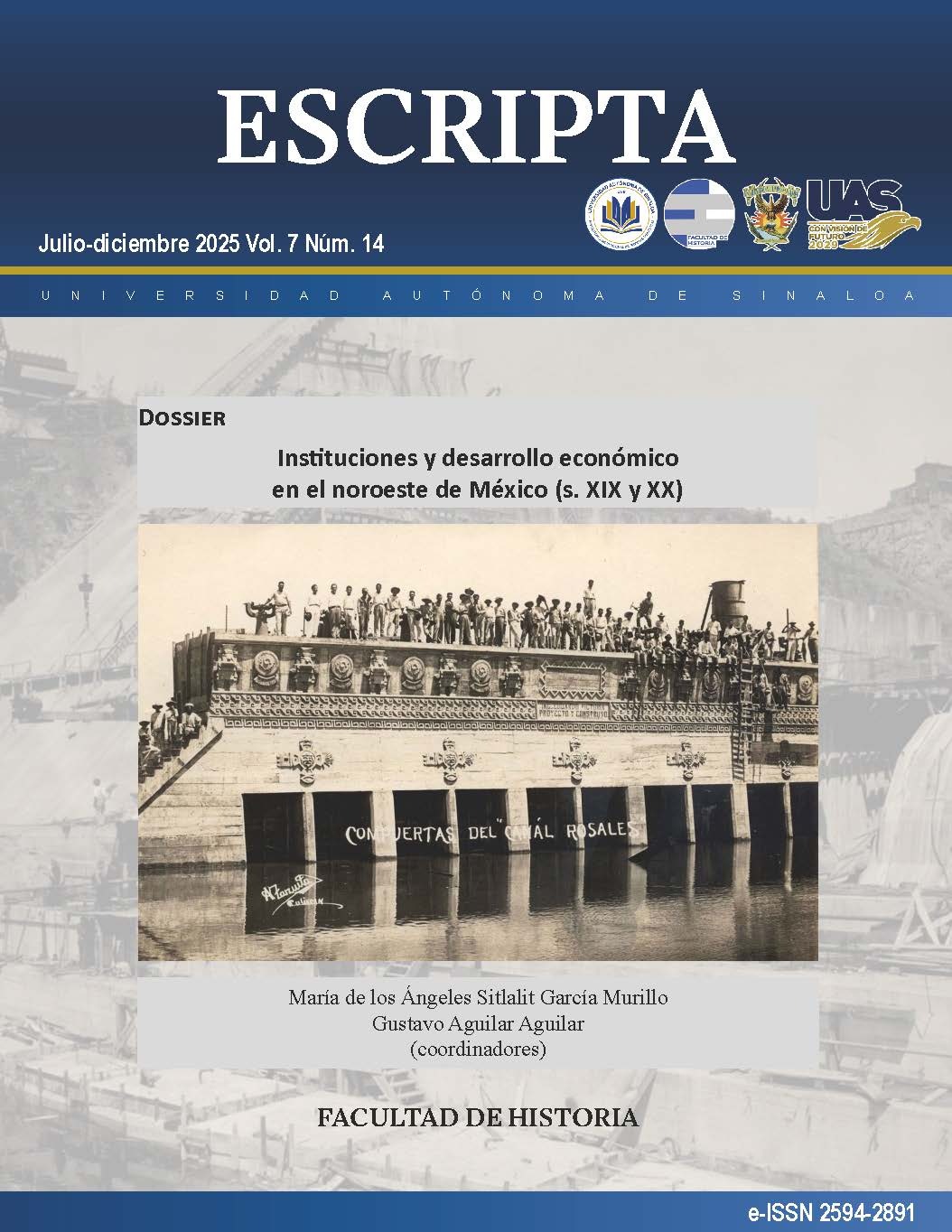
Vol. 7 No. 14 (2025)Dossier: Institutions and Economic Development in Northwestern Mexico (19th and 20th Centuries)
Cover photograph: Rosales Canal Gates, by Alejandro Arechiga Zazueta (Historical Archive Mexico and Mexican Central Water Library).
Background image: Construction Works on the Rodríguez Dam Embankment, by José Loreto Favela (Historical Archive Mexico and Mexican Central Water Library).
María de los Ángeles Sitlalit García Murillo
Gustavo Aguilar Aguilar
Guest Editors -
Escripta Revista de Historia
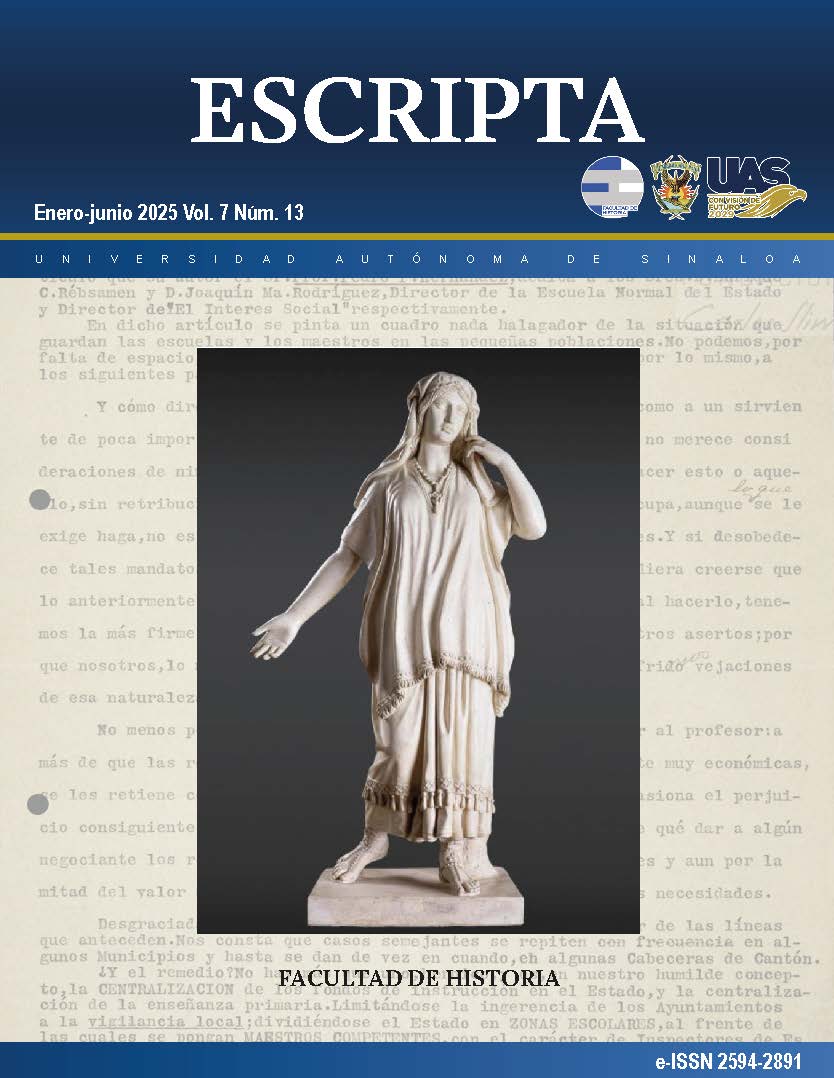
Vol. 7 No. 13 (2025)This issue of our journal brings together a diverse collection of studies that, under the open-topic format, reflect the plurality of interests, approaches, and scales of analysis that currently characterize historiography and the social sciences.
At Escripta, we take pride in serving as an emerging platform for dialogue across different temporalities, spaces, and historical problems. The contributions gathered here underscore the idea that historical processes can rarely be understood in isolation. The press as an actor and mediator of discourse, mining as an economic and social activity, the political and cultural movements of the twentieth century, as well as the enduring traces of ideologies and conflicts in contemporary politics, are interwoven throughout this issue, offering new perspectives and avenues for reflection.
Cover image: Doña Marina or La Malinche (1852), by Manuel Vilar (patinated plaster cast, National Museum of Art).
Background image: Popular Education in Small Towns, from the Manuscripts of the First Chief of the Constitutionalist Army Collection, 1889–1920.
Venecia Citlali Lara Caldera
Ernesto Alonso Montoya Sandoval
-

Escripta Revista de Historia
Vol. 6 No. 12 (2024)Dossier: Región y Ciudad: acercamientos desde la historia económica y social
A comienzos de la última década del siglo XX surgieron voces discordantes con la historia regional que estaba experimentando un notable crecimiento dentro de la producción historiográfica. Las críticas giraron en torno a las ambigüedades y en el uso indistinto de ciertos términos como local, microhistoria y regional, así como en la confusión de tomar a las regiones como si fueran las entidades federativas (Miño Grijalva, 2002, pp. 867-868). Estas objeciones a la historia regional generaron distintas reacciones, que, si bien no estuvieron de acuerdo con Miño Grijalva, tampoco echaron en saco roto sus observaciones y a partir de ese momento se presentaron esfuerzos por enriquecer la definición de los conceptos de región y ciudad desde intensos intercambios interdisciplinares (Antonio Ibarra, 2002, pp. 241-243).
Foto de portada: Fotografía aérea de un segmento de la delegación Plan Liberta-dor (atribuido) Registro fotográfico del crecimiento de Rosarito, de Jorge M. Peón (fotógrafo). Fondo: Archivo Histórico del Agua, Fondo Colección Fotográfica, Caja 1287, Expediente 39014.
Jesús Rafael Chávez Rodríguez
Sandra Luz Gaxiola Valdovinos
Coordinadores
-
Escripta. Free theme
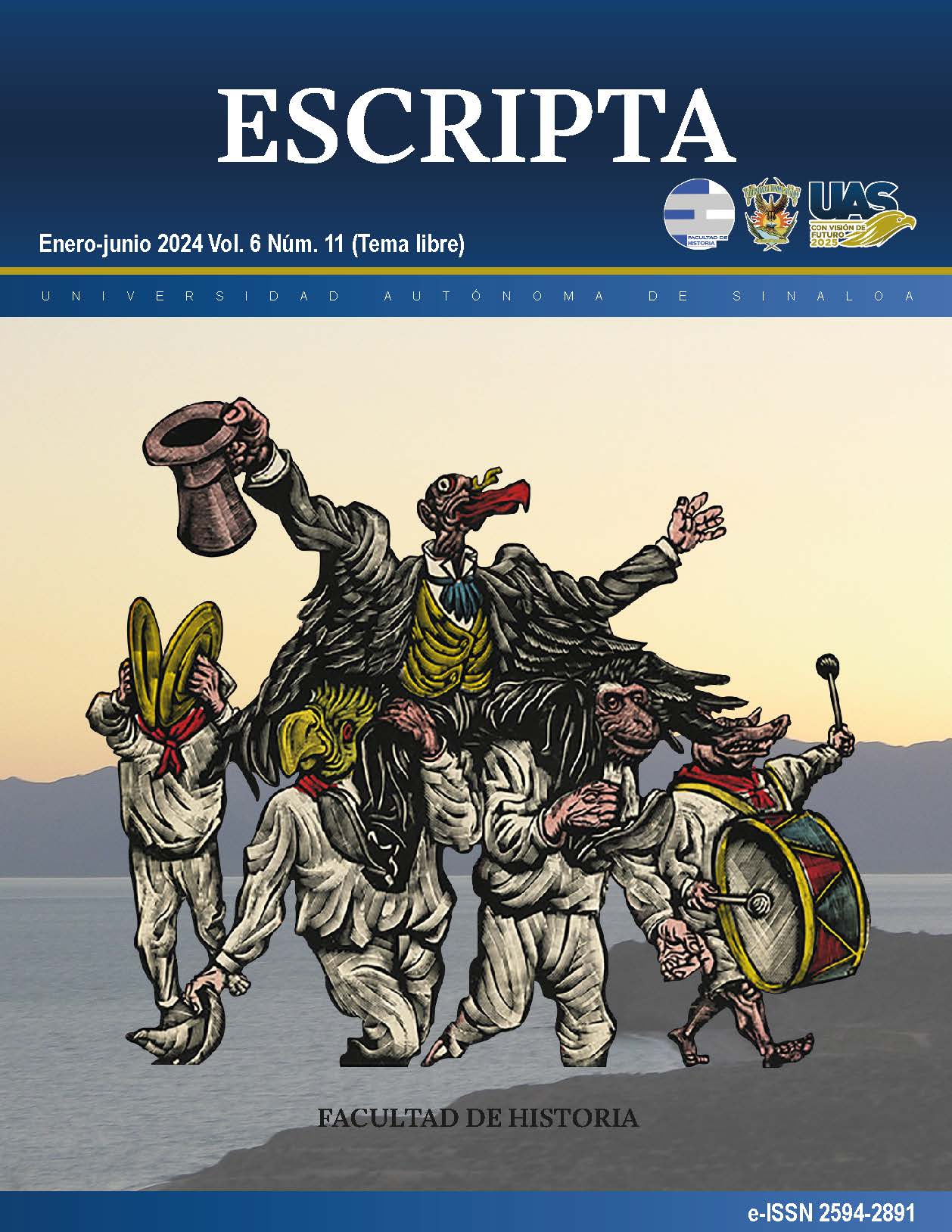
Vol. 6 No. 11 (2024)Tema libre
Foto de portada: detalle de ilustración de Leopoldo Méndez para la portada del libro Incidentes melódicos del mundo irracional, de Juan de la Cabada (1944). Fondo: Vista de la parte sur de la isla Tiburón (https://www.wikiwand.com/es/Pueblo_seri).
Venecia Citlali Lara Caldera
Ernesto Alonso Montoya Sandoval
-
Escripta Revista de Historia
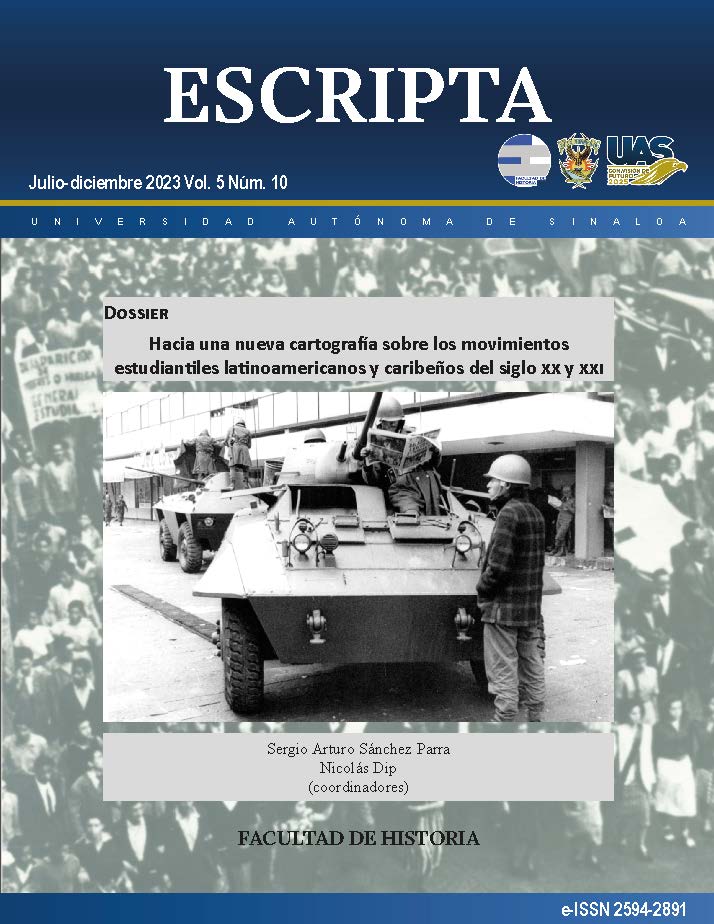
Vol. 5 No. 10 (2023)This Dossier contributes to the construction of a new cartography of 20th and 21st-century Latin American and Caribbean student movements. One of the collective efforts of this work was to showcase the heterogeneity of national experiences. This construction of Latin American and Caribbean student activisms of the 20th and 21st centuries remains a pending, long-term task. The present dossier seeks to counter geographical reductionism with eleven articles written from diverse social and academic coordinates across Latin America and the Caribbean. Furthermore, it aims to strengthen lines of study capable of addressing diverse experiences and timelines in light of multiple geographical references, expressing the common dynamics and particular logics that shape the south, center, and north of the continent. Ultimately, the commitment of this collection of works is both to deepen ties among specialists, academics, and students in the region, and to promote an interdisciplinary dialogue with a historical perspective on the protests and conflicts of a collective actor that, through highs and lows, advances and retreats, ebbs and flows, tensions and contradictions, remains part of the complex political and social landscape of Latin America and the Caribbean.
-
Escripta Revista de Historia
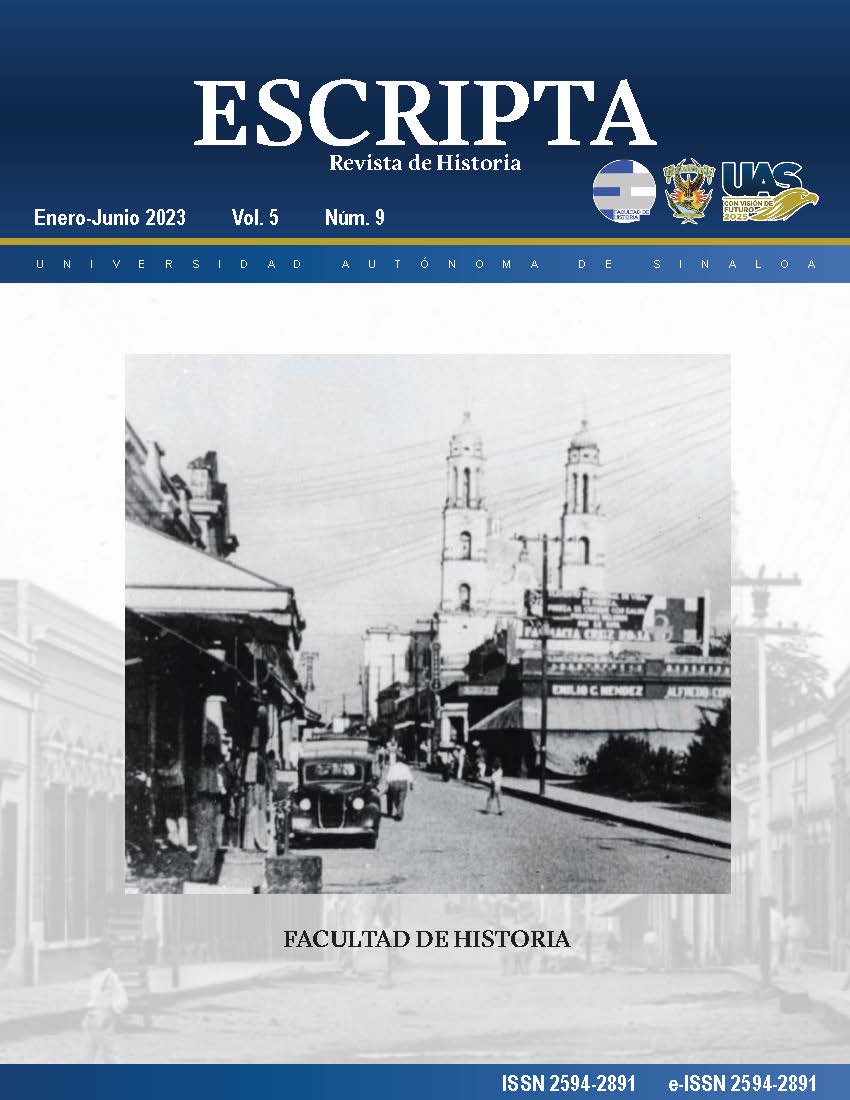
Vol. 5 No. 9 (2023)Tema libre
Foto de portada: Antiguo Culiacán, Calle del Comercio (hoy Ángel Flores), Culiacán, Sinaloa.
Félix Brito Rodríguez
Ernesto Alonso Montoya Sandoval
-

Escripta Revista de Historia
Vol. 4 No. 8 (2022)Tema libre
Foto de portada: Playa Las Labradas, Sinaloa. Foto tomada de https://www.playas.com.mx/playa/mexico/1422/playa-las-labradas
Félix Brito Rodríguez
Santos Javier Velázquez Hernández
-

Escripta Revista de Historia
Vol. 4 No. 7 (2022)Tema libre
Foto de portada: “Clío, musa de la historia”, Instituto Nacional de Estudios Históricos de las Revoluciones de México.
Félix Brito Rodríguez
Santos Javier Velázquez Hernández
-
Escripta Revista de Historia
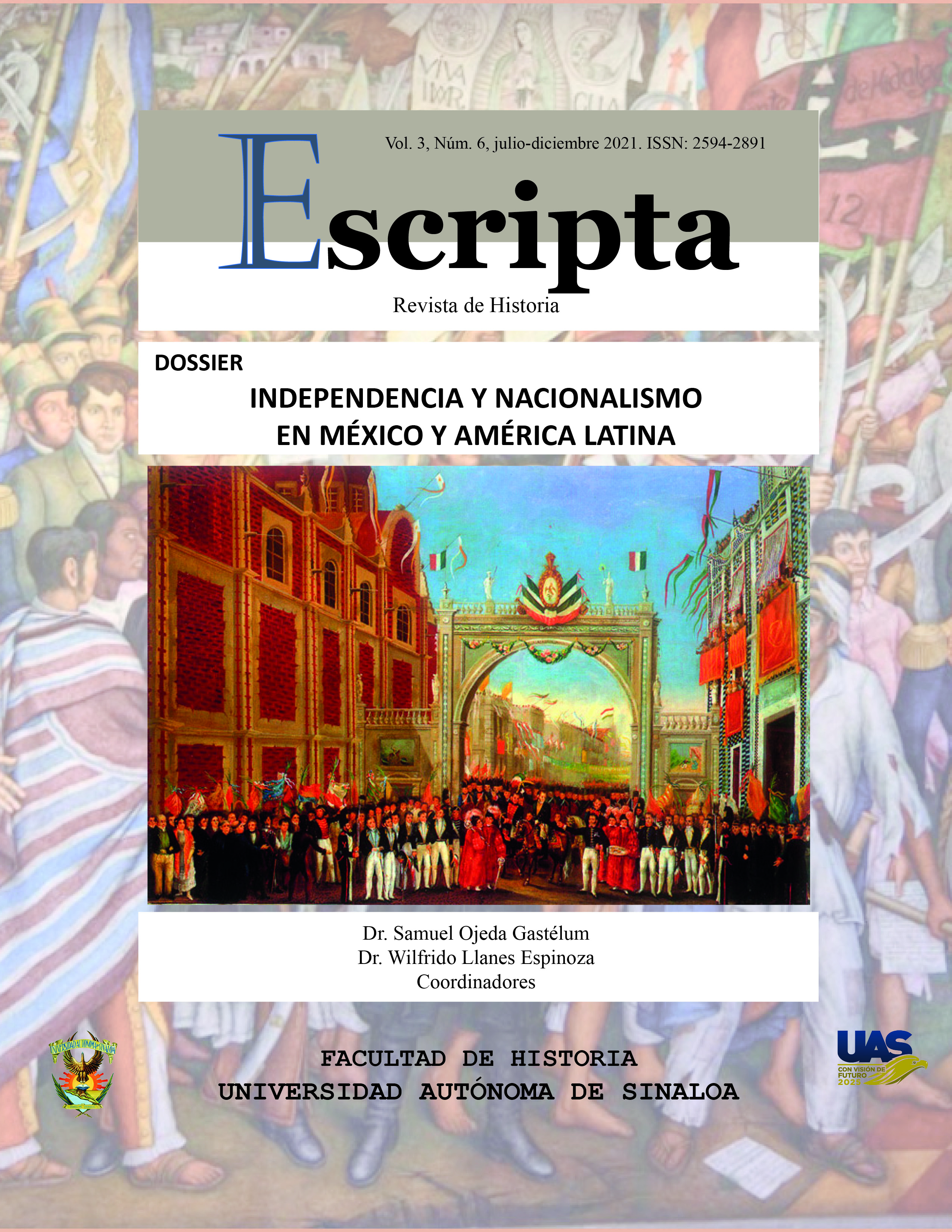
Vol. 3 No. 6 (2021)Dossier: Independence and Nationalism in Mexico and Latin America
Cover photo: Independence Altarpiece by Juan O’Gorman. Section of an anonymous painting, showing the arrival of the Trigarante Army and its welcome to Mexico City.
Dr. Samuel Ojeda Gastélum
Dr. Wilfrido Llanes Espinoza
Coordinators -
Escripta Revista de Historia
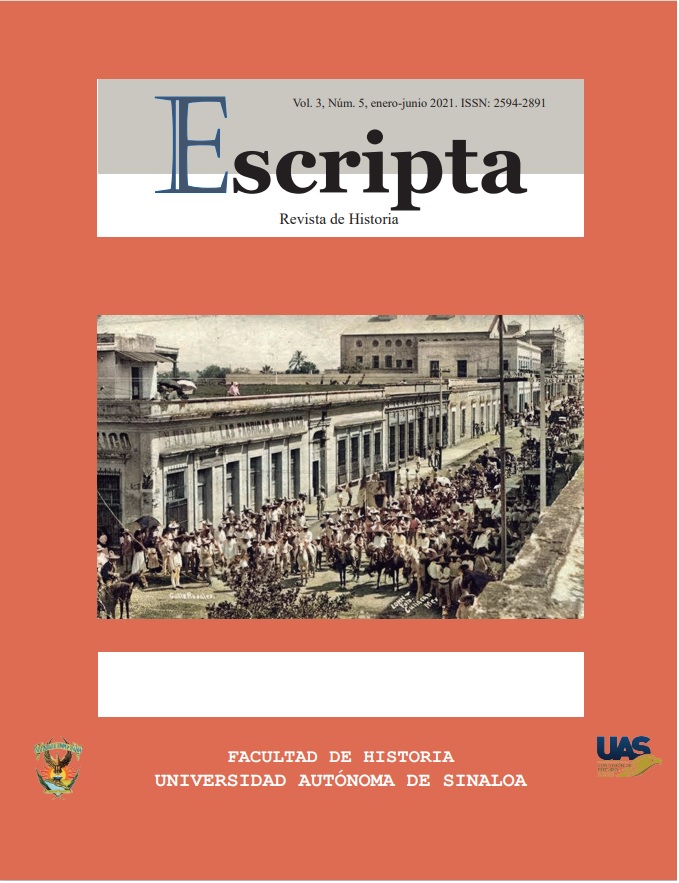
Vol. 3 No. 5 (2021)Free theme. Cover photo: Rosales Street, Culiacán. Ca. 1905. Photographer: Alberto Lohn. Félix Brito Rodríguez Mariel Iribe Zenil -

Escripta Revista de Historia
Vol. 2 No. 4 (2020)Two years of a historiographical effort With the fourth issue of this journal, an initial two-year period of Escripta’s existence is completed; however, the effort to materialize this project began a year earlier. In June 2019, the first issue was published, following a call for papers issued in September 2018 and after an editorial configuration process that started at the beginning of that same year. This process involved actions such as building the Editorial and Scientific Committee, defining editorial policies, registering with INDAUTOR to obtain the ISSN, installing and designing the Open Journal System (OJS), defining publication criteria, and acquiring plagiarism detection software, among other tasks typical of the enterprise of launching an editorial and scientific project that seeks to meet national and international standards. From the beginning, Escripta has had the institutional support of the Autonomous University of Sinaloa and the Faculty of History through its academic bodies: Sociocultural History, Economic and Social History, and History of Institutions and Ideas. Furthermore, its Editorial Committee includes prominent professors from the institution, and its Scientific Committee features respected and renowned national and international researchers who assist in evaluating articles, assessing special issues, and managing other aspects of editorial policy... Jesús Rafael Chávez Rodríguez
Anderson Paul Gil Pére -
Escripta Revista de Historia
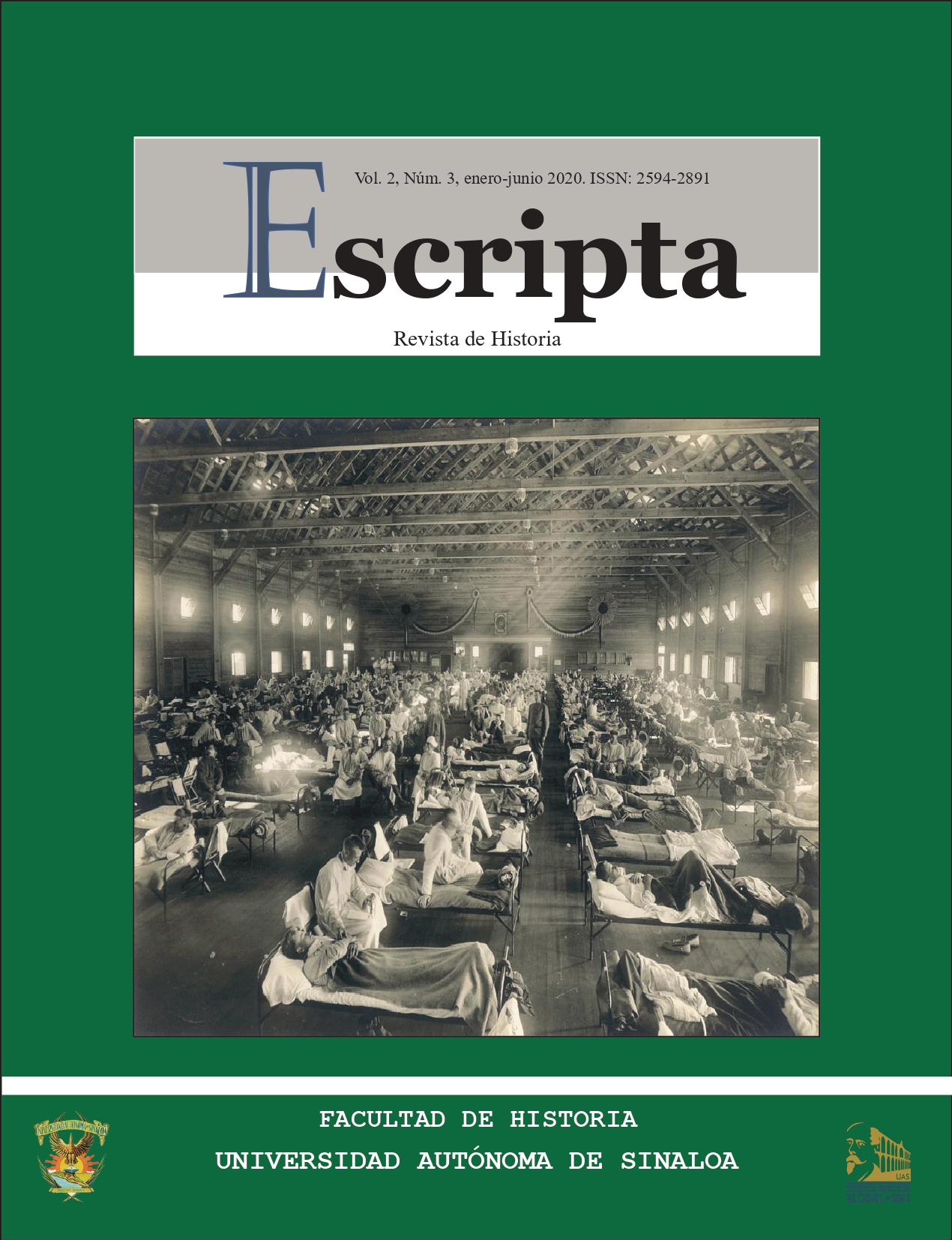
Vol. 2 No. 3 (2020)Digital History Journals in Times of Pandemic In the final days of December 2019, we published Vol. 1, No. 2 of Escripta. All members of the Editorial Committee felt the excitement of completing our first year of editorial operations. The two issues represented experience and learning in the face of the challenges of academic publishing within the framework of public universities in Latin America. At the same time, we celebrated the publication of the dossier "Student Movements in Latin America: After the Fiftieth Anniversary of the '68s" (Sánchez Parra & Vidales Quintero, 2019), which featured contributions from prominent national and international researchers. However, we did not know that the greatest challenge would be Vol. 2, No. 3 (January-June 2020), which would involve an editorial process in the midst of the global crisis caused by the Coronavirus (COVID-19) pandemic. Jesús Rafael Chávez Rodríguez
Anderson Paul Gil Pérez -
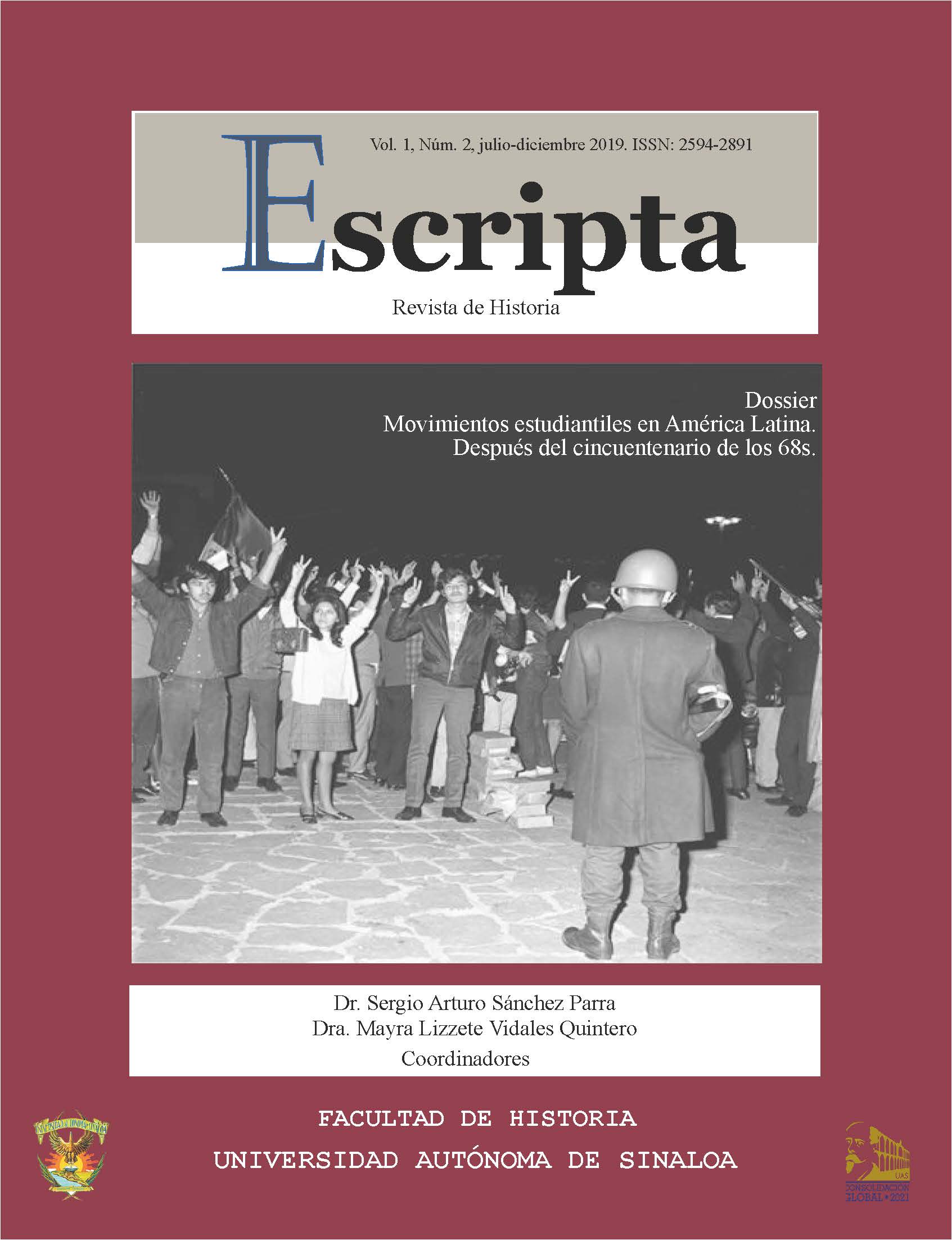
Escripta Revista de Historia
Vol. 1 No. 2 (2019)Dossier: Student Movements in Latin America. After the Fiftieth Anniversary of the '68s. Commemorations, anniversaries, and the like are not mere remembrances of past events identified as outstanding and defining of the societies in which they originated. As Le Goff highlights, "Collective memory...is not just a conquest: it is an instrument and an aim of power." (Le Goff, 1991, p. 181). Thus, memory is re-edified within the framework of challenges and questions whose answers pose the need to reflect critically on the past, on the history of societies from their present. The interpretations and reinterpretations of this past are different, not only because their foundations rest on a specific school or historiographical current and on specific criteria or sources, but also because they have different uses and respond to questions and demands of contemporary societies. Dr. Sergio Arturo Sánchez Parra
Dr. Mayra Lizzete Vidales Quintero
Coordinators Si lo deseas, indícame si prefieres ajustar el vocabulario académico o si necesitas ayuda para traducir el resto del documento. -

Escripta Revista de Historia
Vol. 1 No. 1 (2019)Escripta: an invitation to academic and research dialogue The journal Escripta was born with the purpose of overcoming the limits that paper imposes on the dissemination of regional research results. It acts as a transnational bridge through which historical knowledge can flow from the most distant places to our closest research spaces and contexts, allowing our research to transcend the local and regional spheres into much broader and more diverse arenas of discussion.