Archives
-
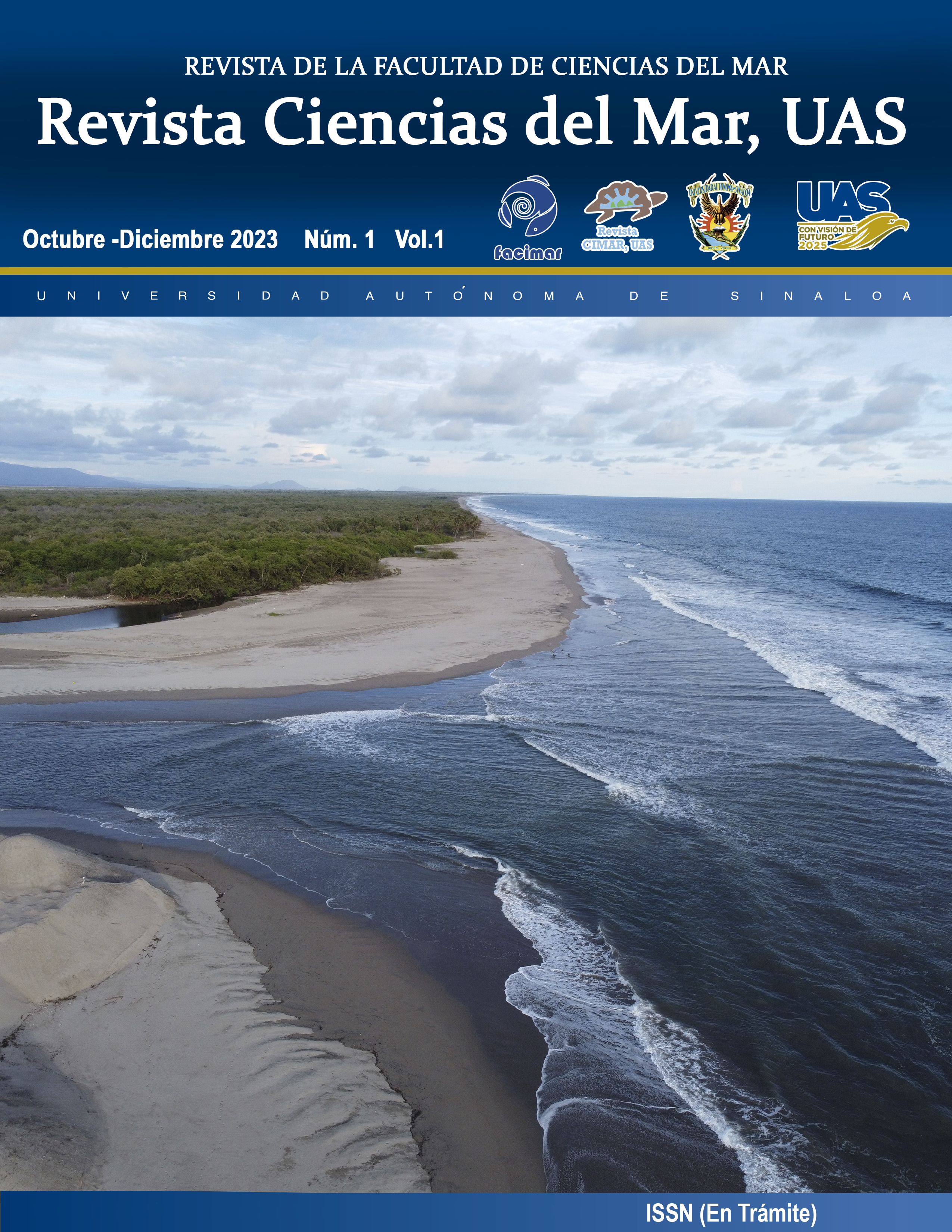
Revista Ciencias del Mar, UAS.
Vol. 1 No. 1 (2023)CIMAR UAS is an open-access, online scientific journal with national and international reach, edited and published by the Faculty of Marine Sciences at the Autonomous University of Sinaloa (Universidad Autónoma de Sinaloa). Published quarterly in both Spanish and English, the journal's mission is to feature original, unpublished research across a wide range of marine-related topics. These fields include, but are not limited to, Fisheries Science, Aquaculture, Environmental Conservation, Biodiversity, Public Policy, and the Social Dimension of Marine, Fisheries, Aquaculture, and Freshwater Sciences.
-
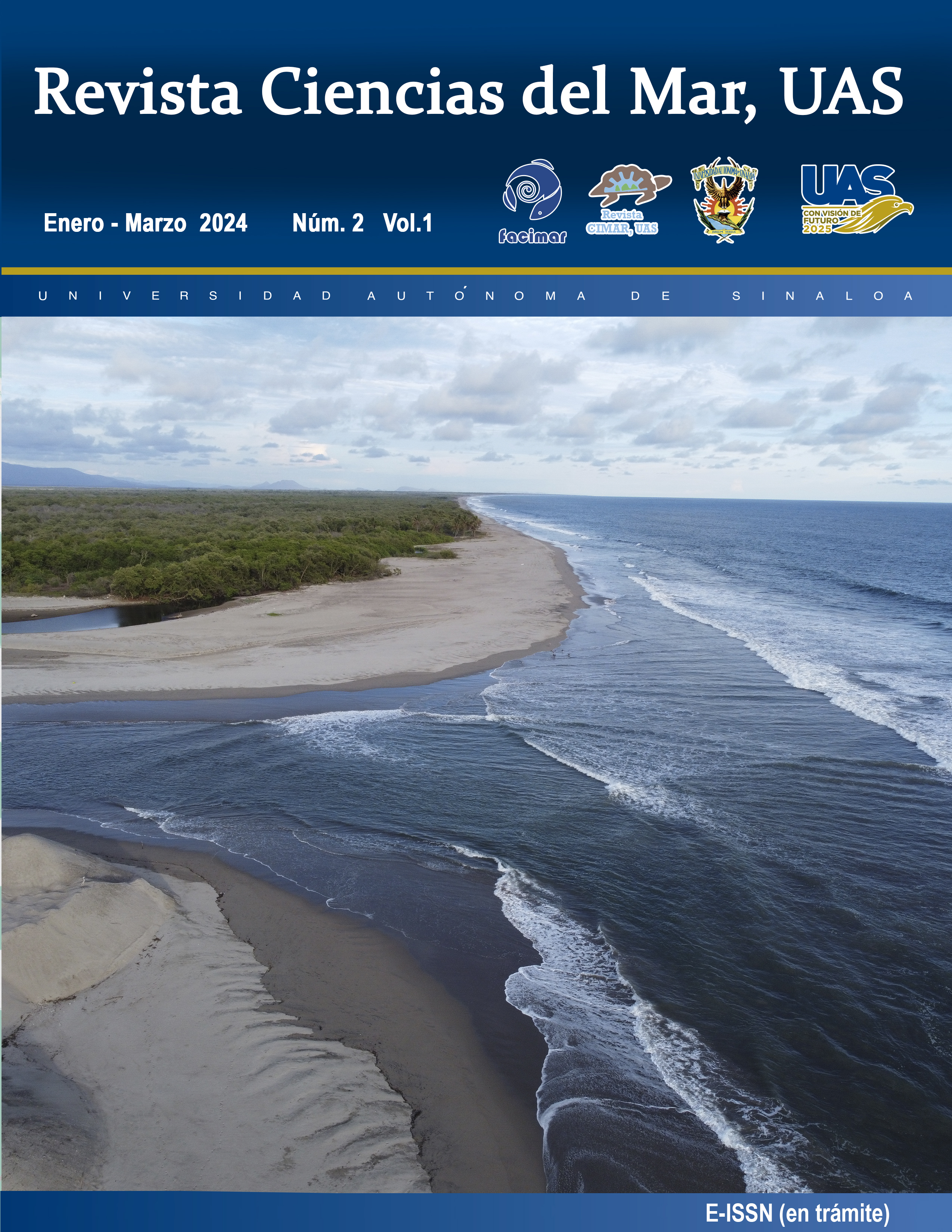
Revista Ciencias del Mar, UAS.
Vol. 1 No. 2 (2024)CIMAR UAS is an open-access, online scientific journal with national and international reach, edited and published by the Faculty of Marine Sciences at the Autonomous University of Sinaloa (Universidad Autónoma de Sinaloa). Published quarterly in both Spanish and English, the journal's mission is to feature original, unpublished research across a wide range of marine-related topics. These fields include, but are not limited to, Fisheries Science, Aquaculture, Environmental Conservation, Biodiversity, Public Policy, and the Social Dimension of Marine, Fisheries, Aquaculture, and Freshwater Sciences.
-
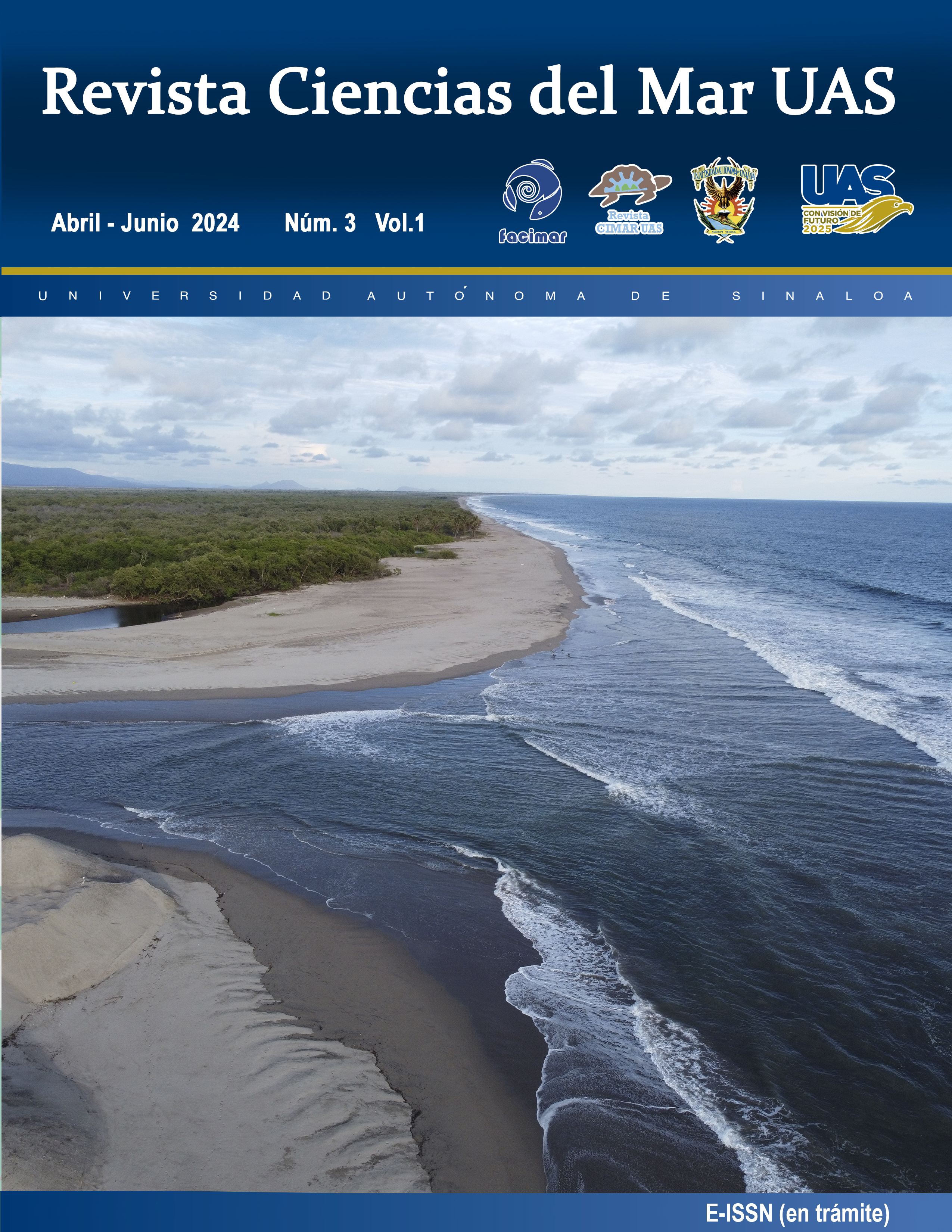
Revista Ciencias del Mar UAS
Vol. 1 No. 3 (2024)CIMAR UAS is an open-access, online scientific journal with national and international reach, edited and published by the Faculty of Marine Sciences at the Autonomous University of Sinaloa (Universidad Autónoma de Sinaloa). Published quarterly in both Spanish and English, the journal's mission is to feature original, unpublished research across a wide range of marine-related topics. These fields include, but are not limited to, Fisheries Science, Aquaculture, Environmental Conservation, Biodiversity, Public Policy, and the Social Dimension of Marine, Fisheries, Aquaculture, and Freshwater Sciences.
-
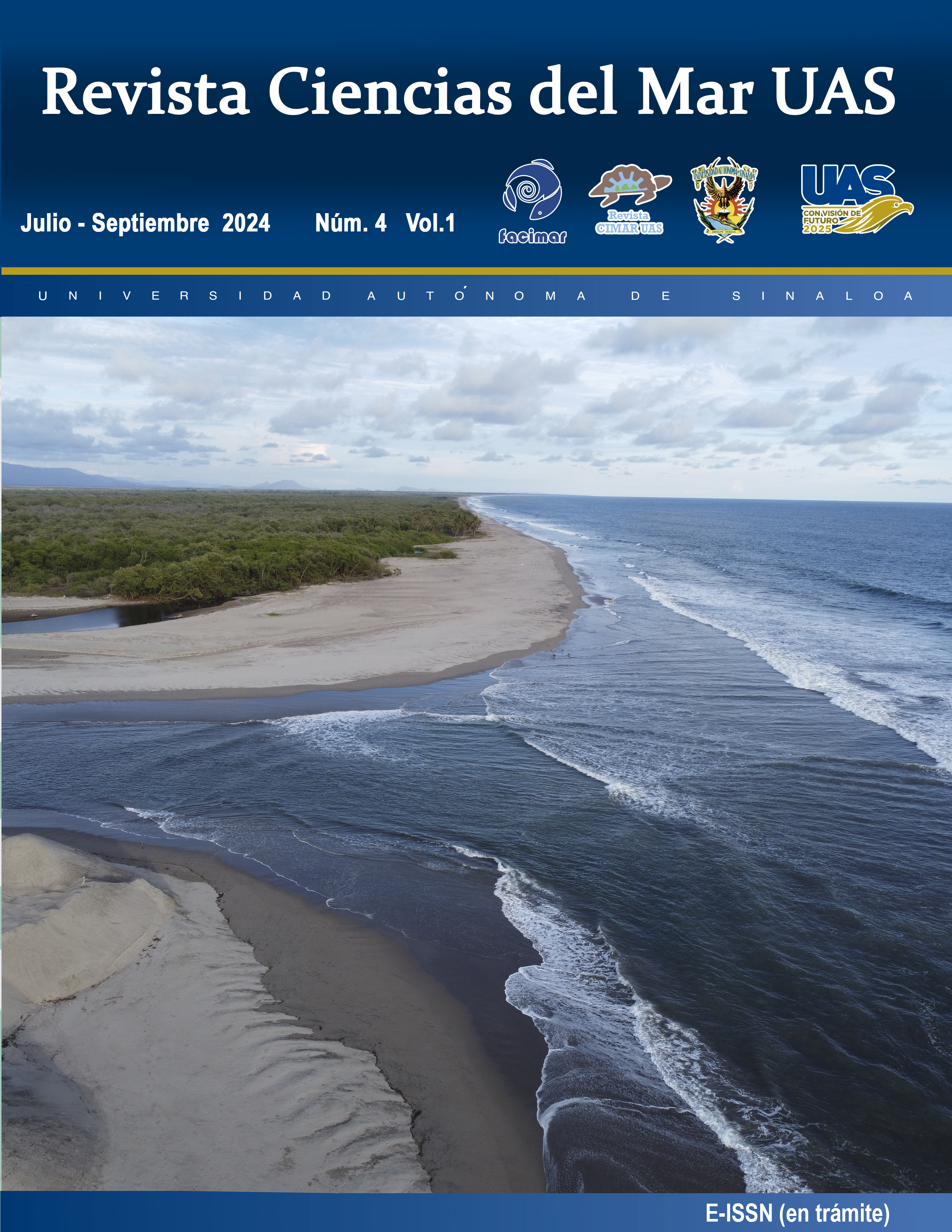
Revista Ciencias del Mar UAS
Vol. 1 No. 4 (2024)CIMAR UAS: is an open-access, online scientific journal with national and international reach, edited and published by the Faculty of Marine Sciences at the Autonomous University of Sinaloa (Universidad Autónoma de Sinaloa). Published quarterly in both Spanish and English, the journal's mission is to feature original, unpublished research across a wide range of marine-related topics. These fields include, but are not limited to, Fisheries Science, Aquaculture, Environmental Conservation, Biodiversity, Public Policy, and the Social Dimension of Marine, Fisheries, Aquaculture, and Freshwater Sciences.
-

Revista Ciencias del Mar UAS
Vol. 2 No. 1 (2024)We are pleased to present Volume 2, Issue 1 of the journal Ciencias del Mar UAS. This new volume is the result of the collective effort and tireless dedication of our editorial team, and it features five outstanding research articles:
-
Artisanal fishing of the Pacific sierra (Scomberomorus sierra) in the Upper Gulf of California.
-
Socioeconomic and operational aspects of lobster harvesting in Mazatlán, Sinaloa.
-
Vegetation as a strategic element for coastal zone management: The case of southern Sinaloa.
-
Estero del Yugo: An analysis of biological diversity, anthropogenic threats, and mitigation strategies.
-
Changes in the spatial distribution of the white shrimp Penaeus vannamei in semi-intensive culture ponds in response to lunar phases.
This issue represents a significant milestone, achieved through the hard work and commitment of everyone involved in the editorial process. From the authors and reviewers to the editorial and technical teams, each has contributed with dedication and effort to ensure the quality and rigor of the published articles.
We invite our readers to explore the contents of this issue, which will undoubtedly enrich your knowledge and understanding of marine sciences.
-
-
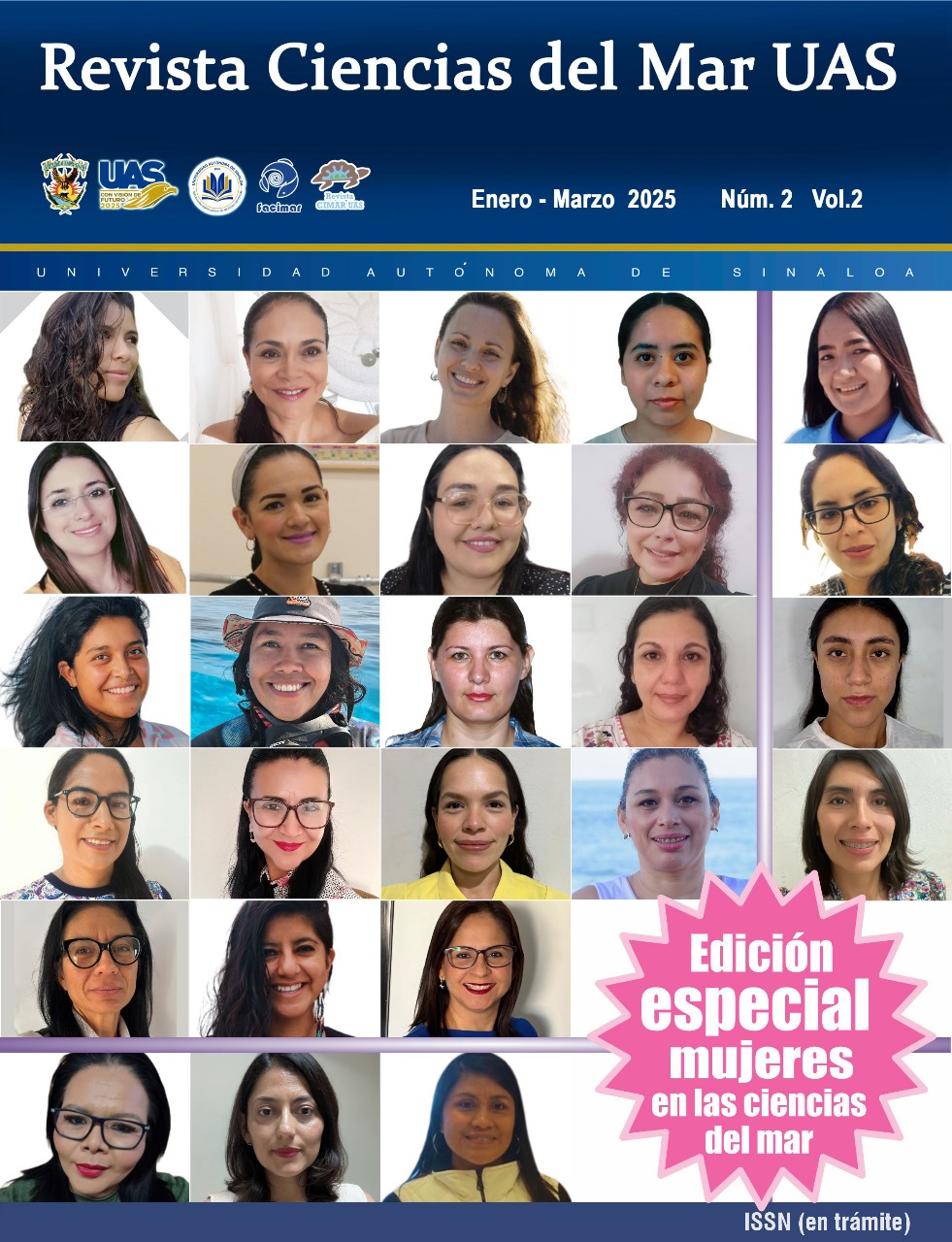
Revista Ciencias del Mar UAS - Edición Especial
Vol. 2 No. 2 (2025)The special issue of the Ciencias del Mar UAS journal is dedicated to recognizing and celebrating the outstanding contributions of women in marine sciences. This edition brings together a variety of scientific articles that reflect the invaluable contributions of women in fields such as fisheries, aquaculture, the environment, and sustainable development.
Under the coordination and special editorship of Dr. Crisantema Hernández González, this issue represents a collective effort to highlight and honor the impact of women in this fascinating scientific field. Her leadership and dedication have been key in the creation of this issue, which showcases the excellence and passion of the participating authors.
We invite you to read the captivating letter from the editor, a message located inside the cover that encapsulates the essence and vision of this special edition.
Through this publication, we not only emphasize the transformative role of women in advancing marine sciences, but also aim to inspire future generations, showcasing the talent and commitment of those driving sustainability and knowledge of our plane
-
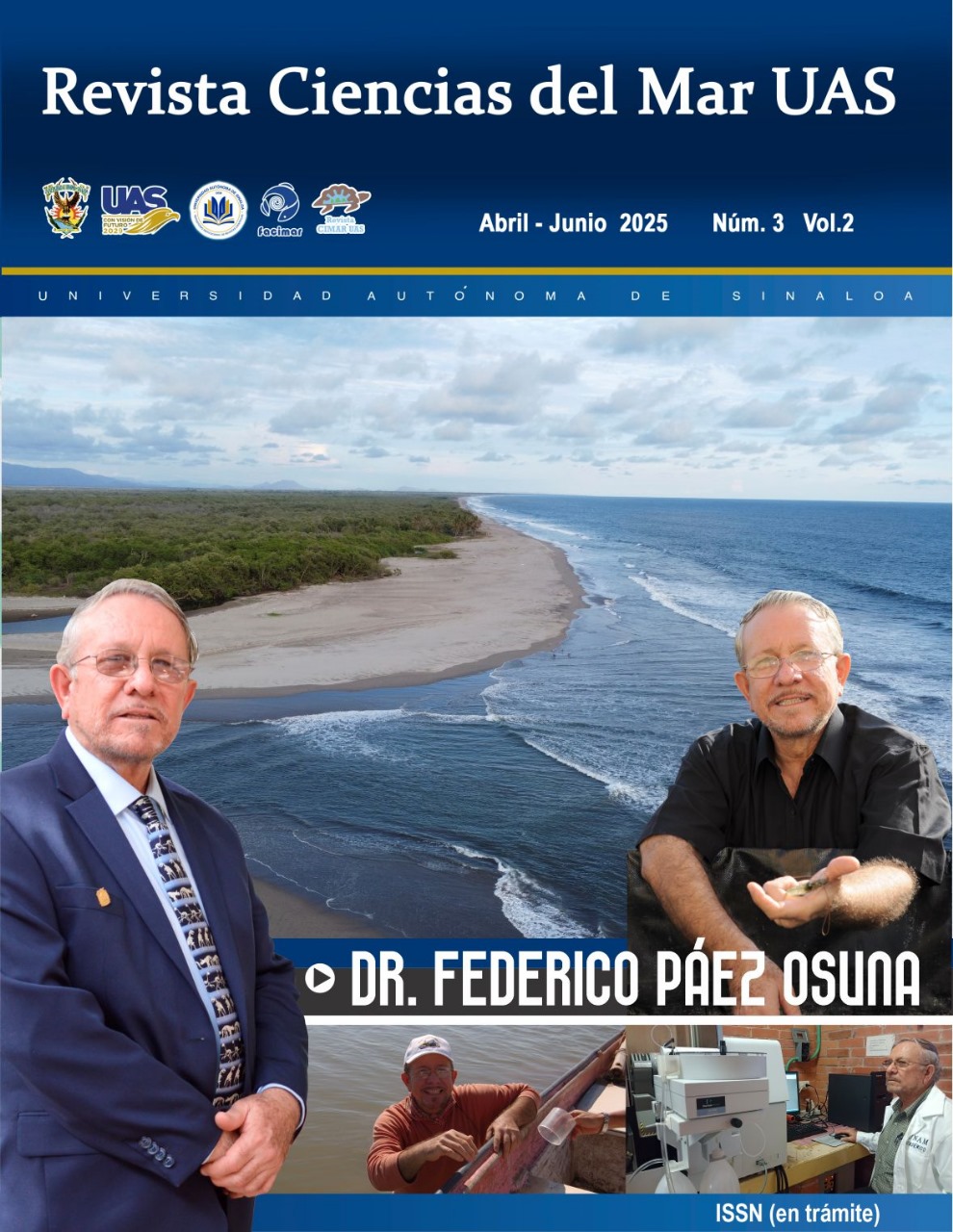
Revista Ciencias del Mar UAS
Vol. 2 No. 3 (2025)Honoring Academic Excellence: Dr. Federico Páez Osuna
In this special edition of the Revista Ciencias del Mar, we highlight the exceptional career of Dr. Federico Páez Osuna, an emblematic figure in Mexico’s marine and environmental science landscape. With over four decades of tireless scientific dedication, Dr. Páez Osuna has made an enduring impact on the study of marine pollution, biogeochemical cycles, aquatic toxicology, and the development of sustainable aquaculture strategies.
His academic output, with more than 270 indexed articles and 12 books, has earned international recognition, positioning him as the most prominent scientist based in Mexico in the field of Environmental Sciences, according to Research.com (2021–2024). Through his leadership, pioneering research on microplastics, heavy metals, and the environmental impact of shrimp farming has flourished, supported by collaborations with leading global institutions and advisory roles in high-level environmental decision-making bodies.
His contribution to the training of more than a hundred highly qualified specialists, his unwavering commitment to science communication, and his recent appointment as Emeritus Researcher by the UNAM reflect the academic spirit and humanistic values that define him.
In recognition of this exceptional trajectory, this issue features his portrait on the cover as a symbol of the legacy that continues to inspire new generations of researchers and educators dedicated to marine sciences. Furthermore, this issue includes a personal contribution authored by Dr. Páez Osuna entitled Strengths, Weaknesses, and Impact of Research by Sinaloan Scientists with Emphasis on Marine Sciences, offering valuable insights into the state and future of regional research.
-
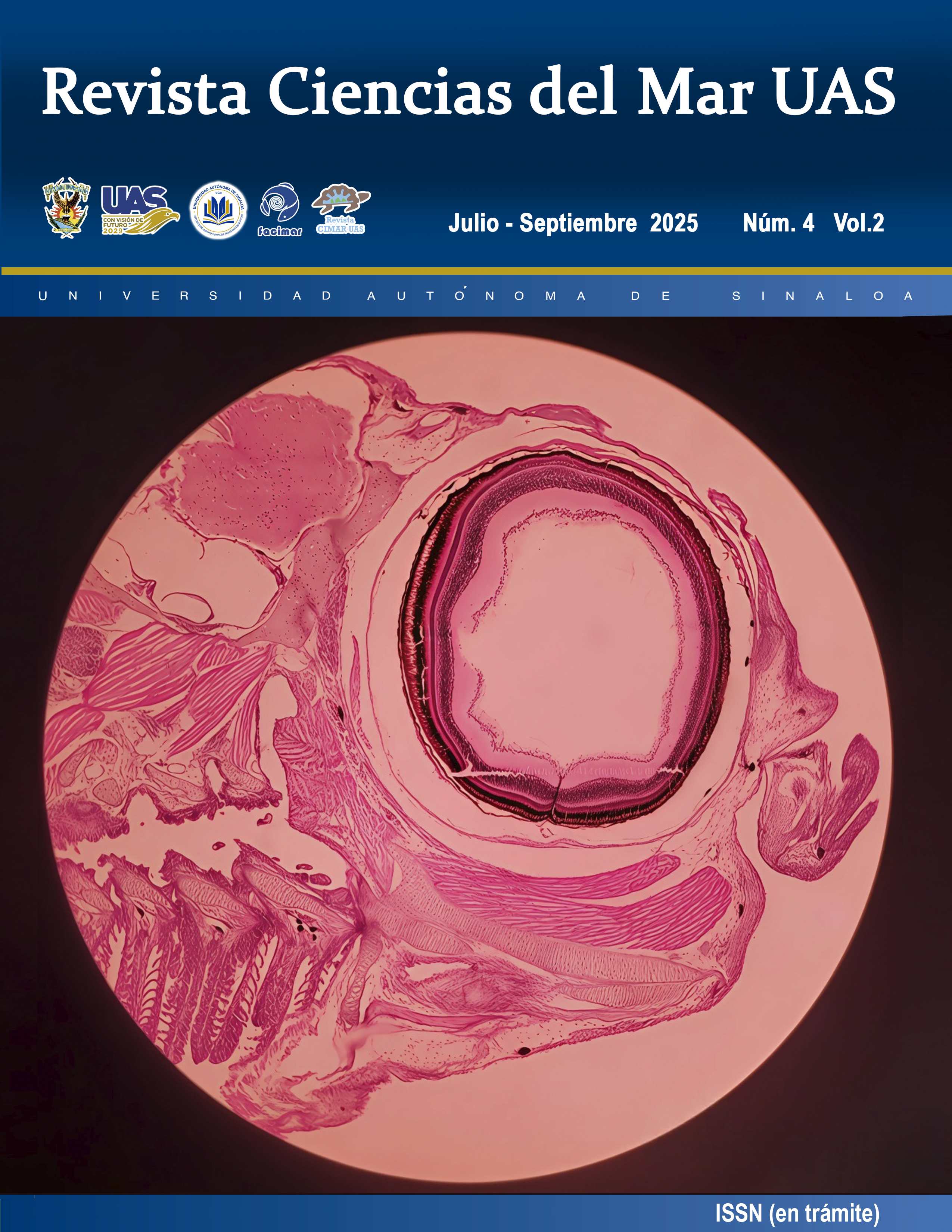
Revista Ciencias del Mar UAS
Vol. 2 No. 4 (2025)As part of the journal’s commitment to scientific outreach and the visual expression of knowledge, the cover of this issue features an original photograph. This image won first place in the scientific photography contest organized by the Faculty of Marine Sciences at the Universidad Autónoma de Sinaloa, held in celebration of World Environment Day and World Oceans Day on June 4, 2025.
The photograph is part of the results of a thesis on fish histopathology and was taken by student Edén Alejandro Rodríguez Vázquez, in collaboration with faculty members M. en C. Selene María Abad Rosales and Dr. Mayra Ixchel Grano Maldonado.
-
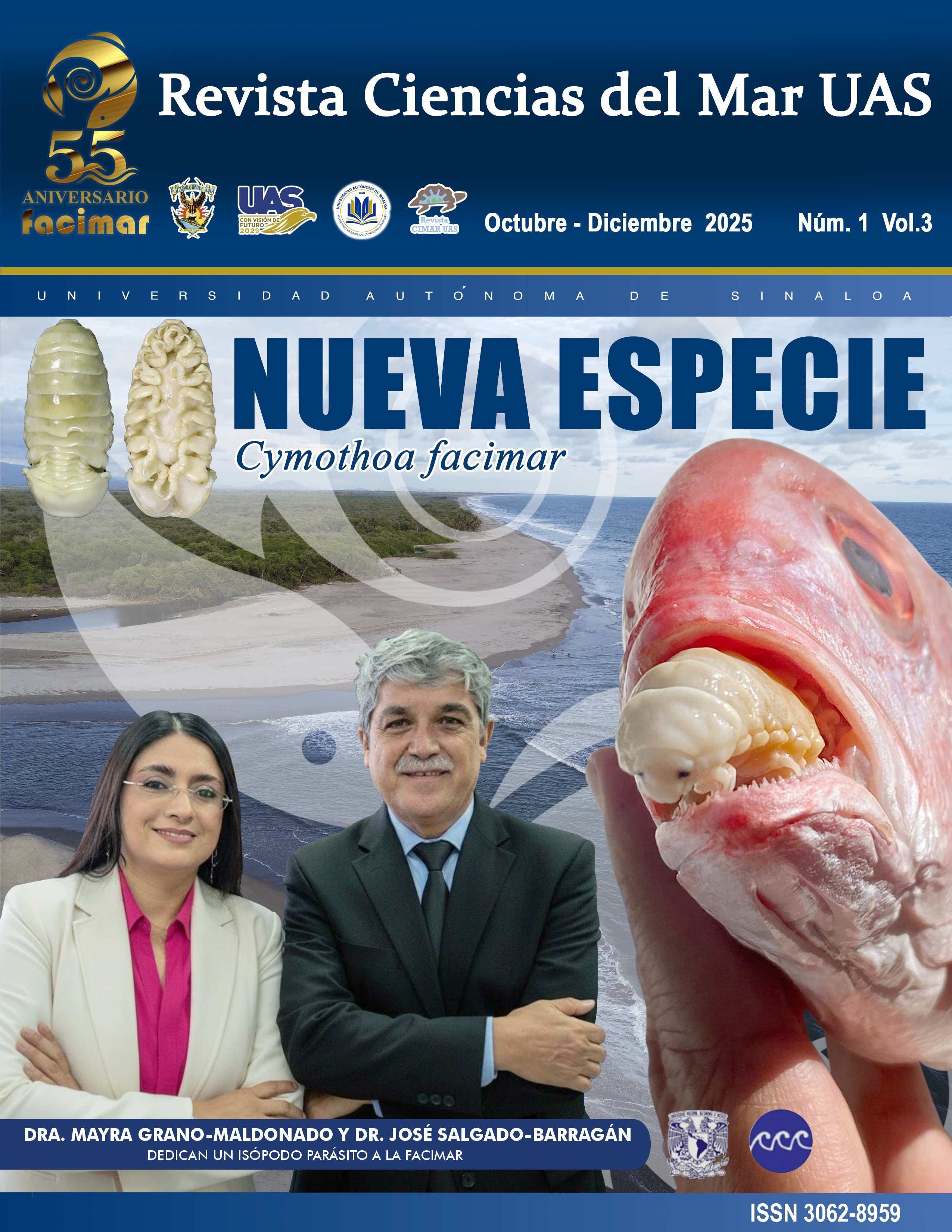
Innovation and Commitment on FACIMAR’s 55th Anniversary
Vol. 3 No. 1 (2025)On the occasion of the second anniversary of the journal and the 55th anniversary of the Faculty of Marine Sciences (FACIMAR) of the Autonomous University of Sinaloa, this issue constitutes a commemorative edition that celebrates the academic and scientific trajectory of the institution.
This issue pays tribute to the discovery of the new parasitic isopod species Cymothoa facimar, named in honor of the Faculty by Dr. Mayra Grano-Maldonado and Dr. José Salgado-Barragán. The cover highlights this finding as a symbol of identity and academic recognition, reaffirming FACIMAR’s commitment to the generation and dissemination of scientific knowledge.
The edition brings together original articles and scientific reviews authored by researchers, alumni, and students, addressing key topics in fisheries, aquaculture, biodiversity, conservation, and climate change, consolidating the journal as a national and international reference in marine sciences.
-
Revista Ciencias del Mar UAS
Vol. 3 No. 2 (2026)This issue is characterized by its thematic and geographic diversity: spanning from Mexico and Ecuador to Antarctica, the articles offer a comprehensive overview of the challenges and opportunities in marine and aquaculture research. Together, these works provide valuable insights for the sustainability of aquatic ecosystems, responsible fisheries management, and the mitigation of environmental impacts.
-
Revista Ciencias del Mar UAS
Vol. 3 No. 3 (2026)We are pleased to present a new issue of our journal, which brings together valuable scientific contributions focused on the assessment, management, and sustainability of aquatic and coastal ecosystems. Through diverse analytical approaches, the authors in this edition address critical problems of great ecological and social relevance, organized within the standard sections of our publication.
The Scientific Article section features a key contribution to littoral environment management with a study on sargassum management in Quintana Roo under the Coastal Management Decalogue, an investigation that examines institutional strategies regarding regional environmental challenges. On the other hand, the Scientific Review section offers a comprehensive overview connecting resource exploitation, pollution, and public health. This section includes studies on tilapia fishing in Sinaloa reservoirs with a view toward sustainable management, as well as an analysis of the effects of copper on human health from marine fish consumption. Finally, the section addresses the urgent issue of waste pollution through two complementary reviews that examine both the effects of the presence of plastics in the marine environment and the classification, dynamics, and sustainable management of municipal solid waste in coastal and marine environments.
We trust that the analyses and findings presented in this volume will not only enrich current academic knowledge but will also serve as a reference for developing better practices in natural resource conservation. We sincerely thank the authors for entrusting their research to our journal, as well as the peer reviewers who made the quality of this publication possible.